
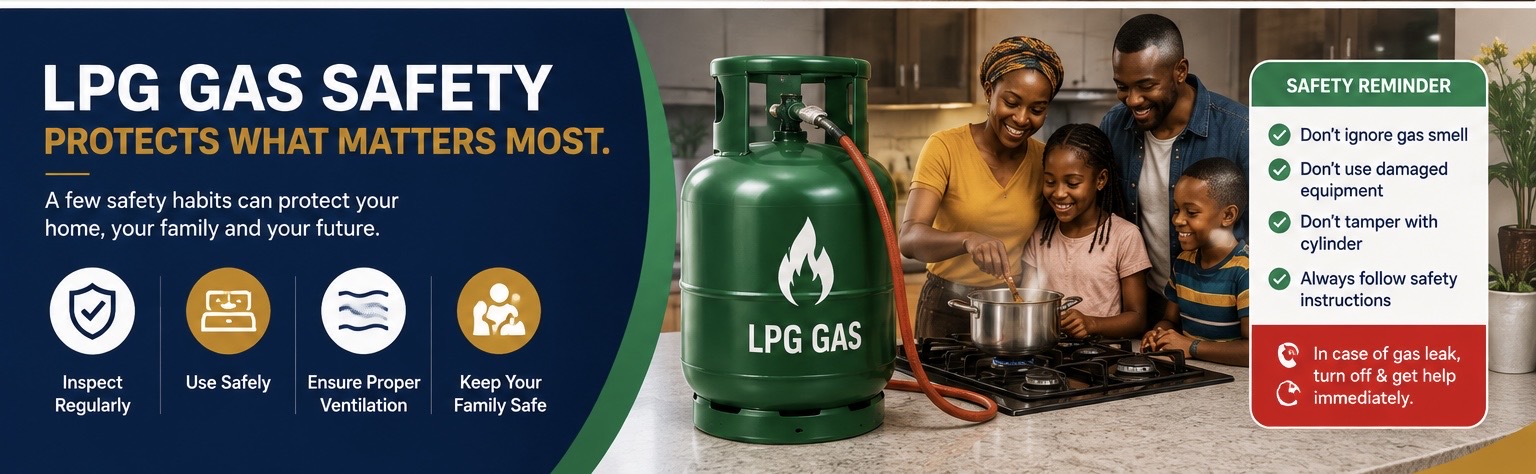
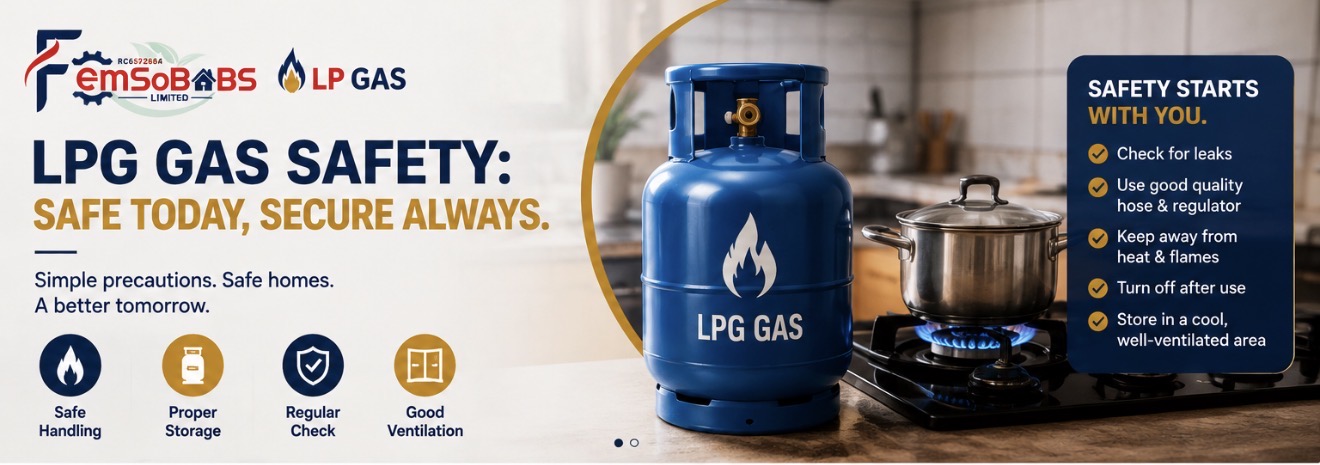
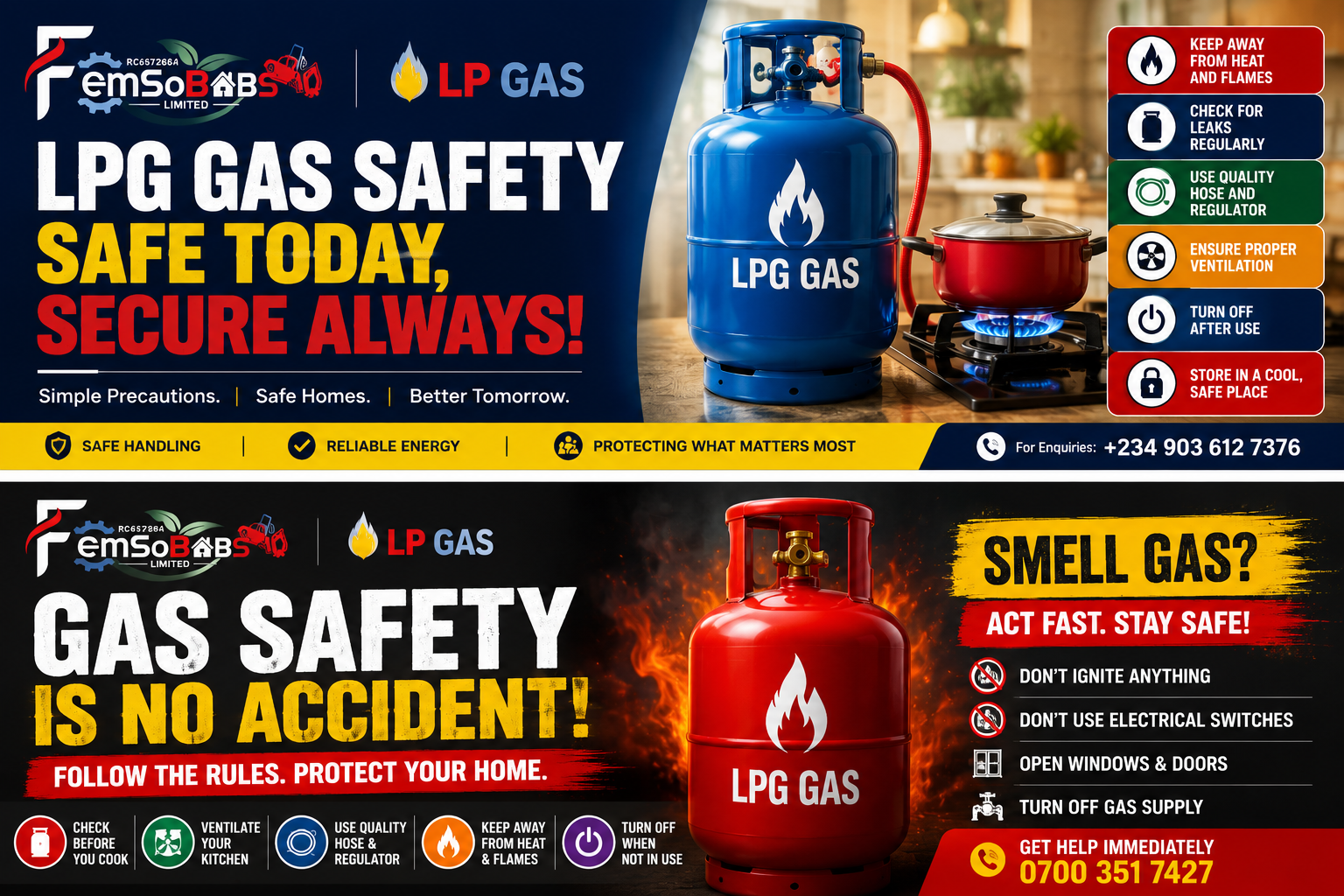
Liquefied Petroleum Gas, commonly known as LPG or cooking gas, is widely used in homes because it is convenient, efficient and suitable for everyday cooking. However, like other energy sources, LPG must be handled responsibly.
What Is LPG?
LPG stands for Liquefied Petroleum Gas. It is a fuel commonly used for cooking, heating and other energy needs. LPG is usually stored in pressurized cylinders and supplied through equipment such as:
- Gas cylinders
- Regulators
- Hoses
- Valves
- Gas cookers or burners
Because LPG is stored under pressure and is highly flammable, every part of the system should be handled carefully and kept in good working condition.
Always Keep Your LPG Cylinder Upright
LPG cylinders should be placed in an upright, stable position. Do not place a cylinder on its side or turn it upside down while in use or storage.
Keeping the cylinder upright helps ensure that the equipment operates as intended and reduces the risk of liquid LPG reaching parts of the system designed for gas flow.
- Place the cylinder on a flat surface
- Choose a stable surface
- Keep the area clean and dry
Avoid placing it where it can easily fall, be knocked over or be exposed to unnecessary impact.
Keep LPG Cylinders Away From Heat and Open Flames
LPG cylinders should be kept away from open flames, hot surfaces, direct sources of intense heat, burning materials and heat-producing equipment.
Avoid placing a cylinder directly beside a cooker or in a location where heat can build up. The area should also have adequate ventilation.
Good placement is one of the simplest ways to support safer LPG use.
Store LPG in a Well-Ventilated Area
LPG equipment should be used and stored in an area with proper airflow. Avoid completely enclosed spaces, poorly ventilated rooms, basements or low areas where leaked gas may collect.
Ventilation is important because it helps prevent gas from accumulating in an enclosed area if a leak occurs. Always follow the safety instructions provided for your specific cylinder, regulator and appliance.
Check Your Gas Hose Regularly
The gas hose connects the cylinder and regulator to the cooking appliance. Over time, hoses may become worn, cracked, loose, damaged or brittle.
Inspect the hose regularly, and if you notice visible damage or signs of wear, stop using the equipment and arrange for replacement by a qualified or competent professional.
Do not attempt temporary repairs using tape, cloth or other unsuitable materials.
Ensure the Regulator Is Properly Connected
The regulator controls the flow of gas from the cylinder. Before using your gas cooker, make sure the regulator is properly fitted and securely connected according to the manufacturer’s instructions.
If the regulator does not fit correctly or appears damaged, avoid using it until it has been checked or replaced.
Safe Practice
A properly fitted regulator is an important part of a safe LPG setup.
Check for Gas Leaks Safely
If you suspect a gas leak, do not use a flame to test for it. Instead, use a soap-and-water solution on the connection points while following appropriate safety guidance.
If bubbles continuously form, this may indicate that gas is escaping.
- Turn off the gas supply if it is safe to do so
- Avoid using electrical switches or appliances nearby
- Do not light a match or lighter
- Keep flames and sparks away
- Open doors and windows if this can be done safely
- Move people away from the area
- Contact a qualified gas technician or the appropriate emergency service
Do not continue using the system until the issue has been properly checked and resolved.
Know What to Do If You Smell Gas
A strong or unusual gas smell may indicate a possible leak. If you smell gas, follow these steps carefully.
- Do not light a match, candle or lighter.
- Do not smoke.
- Do not operate electrical switches or appliances.
- Avoid creating sparks.
- Turn off the gas supply only if it is safe to do so.
- Open doors and windows if possible.
- Move people away from the area.
- Contact a qualified gas professional or emergency service from a safe location.
Do not return to the area until it has been assessed and declared safe by an appropriate professional or authority.
Turn Off the Gas Supply After Use
After cooking, turn off the cooker controls and follow the manufacturer’s recommended shutdown procedure. Ensure the gas supply is properly closed when the equipment is not in use.
Do not leave cooking appliances operating without supervision. If you are leaving the home for an extended period, check that the LPG system has been properly shut down.
Keep Children Away From LPG Equipment
Children should not play with gas cylinders, regulators, valves, hoses or cookers. Explain basic gas safety to children in an age-appropriate way.
Keep cooking areas supervised and avoid leaving children alone near an operating gas appliance.
Do Not Use Damaged or Corroded Cylinders
Before accepting or using an LPG cylinder, inspect its visible condition. Look for severe rust, dents, damage, leaking valves or unusual wear.
Do not attempt to repair a damaged cylinder yourself. If you have concerns about a cylinder’s condition, contact the supplier or a qualified professional for guidance.
Use the Correct LPG Equipment
Your cylinder, regulator, hose and cooking appliance should be compatible and suitable for the intended LPG system. Avoid improvised connections, unapproved fittings, damaged accessories or using equipment for purposes it was not designed for.
Always follow the manufacturer’s instructions and seek professional help when you are unsure about installation or compatibility.
Never Attempt to Refill a Cylinder Yourself
LPG cylinders should only be filled or refilled through appropriate and authorized facilities. Do not attempt to transfer gas between cylinders, refill a cylinder at home, modify a cylinder or tamper with valves or safety components.
Improper handling can create serious risks. Use a reliable LPG retailer or approved refill service.
Keep Your Kitchen Clean and Organized
A clean cooking area can support safer LPG use. Keep paper, cloth, plastic materials, aerosols and flammable liquids away from open flames and hot cooking surfaces.
Make sure there is enough space around the cooker for safe operation and avoid placing unnecessary items directly beside the cooking area.
Maintain Your Gas Cooker
Your cooker should be kept clean and inspected regularly. Look out for unusual flames, blocked burner openings, difficulty igniting, damaged controls and unusual smells.
If the appliance is not working properly, stop using it and seek professional assistance. Do not continue using equipment that appears faulty.
LPG Gas Safety Checklist
- ☑ Is the cylinder standing upright?
- ☑ Is the area properly ventilated?
- ☑ Is the cylinder away from heat and open flames?
- ☑ Is the regulator correctly fitted?
- ☑ Is the hose in good condition?
- ☑ Are the connections secure?
- ☑ Is the cooker working normally?
- ☑ Is the cooking area clean and free from unnecessary flammable materials?
- ☑ Do household members know what to do if they smell gas?
Regular checks can help identify problems early.
Why Choosing a Reliable LPG Retailer Matters
A reliable LPG retailer can help customers access appropriate products and receive useful guidance on safe handling and use.
- Product quality
- Proper handling
- Reliable service
- Safe operating practices
- Clear customer support
- Availability of suitable LPG products
At FemSoBabs LP Gas, we are committed to providing reliable LPG retail services while promoting responsible and safety-conscious gas use. Our goal is to support households and businesses with dependable service and practical information.
FemSoBabs LP Gas — Reliable Energy for Everyday Living.
Conclusion
LPG is a convenient and efficient cooking fuel, but safety should always come first. Simple practices such as keeping the cylinder upright, maintaining good ventilation, inspecting hoses and regulators, avoiding open flames during suspected leaks and using reliable suppliers can help create a safer environment.
Every household should understand the basics of LPG safety and know how to respond appropriately when something appears wrong.
Use LPG responsibly. Maintain your equipment. Stay safety-conscious.
Frequently Asked Questions
Is it safe to keep an LPG cylinder inside the kitchen?
The safest placement depends on the cylinder type, appliance setup, ventilation and applicable safety guidance. Follow the manufacturer’s instructions and local safety requirements. Avoid enclosed or poorly ventilated spaces.
How can I check if my LPG cylinder is leaking?
Do not use a flame. If you suspect a leak, follow safe leak-checking guidance, such as using a soap-and-water solution on connection points where appropriate. If you detect a possible leak, stop using the system and contact a qualified professional.
What should I do if I smell cooking gas?
Avoid flames, smoking and electrical switches. If safe, shut off the gas supply, ventilate the area, move people away and contact a qualified professional or emergency service from a safe location.
How often should I inspect my gas hose?
Visually inspect the hose regularly and before use. Replace it if you notice cracking, damage, looseness or significant wear, or according to the manufacturer’s recommended replacement schedule.
Can I refill my LPG cylinder at home?
No. LPG cylinders should only be filled through appropriate and authorized refill facilities.
Why should an LPG cylinder remain upright?
Keeping the cylinder upright supports proper operation and helps prevent liquid LPG from entering parts of the system designed for gas flow.
Related Reading
Need Reliable LPG Gas Services?
Choose a trusted LPG retail partner for your household or business needs. Visit FemSoBabs LP Gas to learn more or contact our team.